Mercury UV curing has supported printing production for many years. When reviewing an existing installation, the useful question is which operating costs or practical challenges are affecting your own press.
Electricity and supporting equipment
Look at the curing equipment’s electricity use alongside any chillers or extraction equipment. Measure each part where possible. A comparison that overlooks supporting equipment can miss costs, while one that counts those costs twice can overstate a saving.
Also record the periods when the press is producing work, waiting between jobs or preparing for production. Actual usage gives a more useful picture than rated power alone.
Maintenance and production interruptions
Review replacement lamp frequency, servicing, spare parts and any unplanned downtime. Record what happened and how long production was interrupted. These details help identify whether a change in curing technology would address the real problem.
Heat and warm-up or cool-down periods may also be relevant, depending on the system and work being produced. A dependable installation can still benefit from an operating review, but replacement should be justified by the application.
Compare alternatives against your print requirements
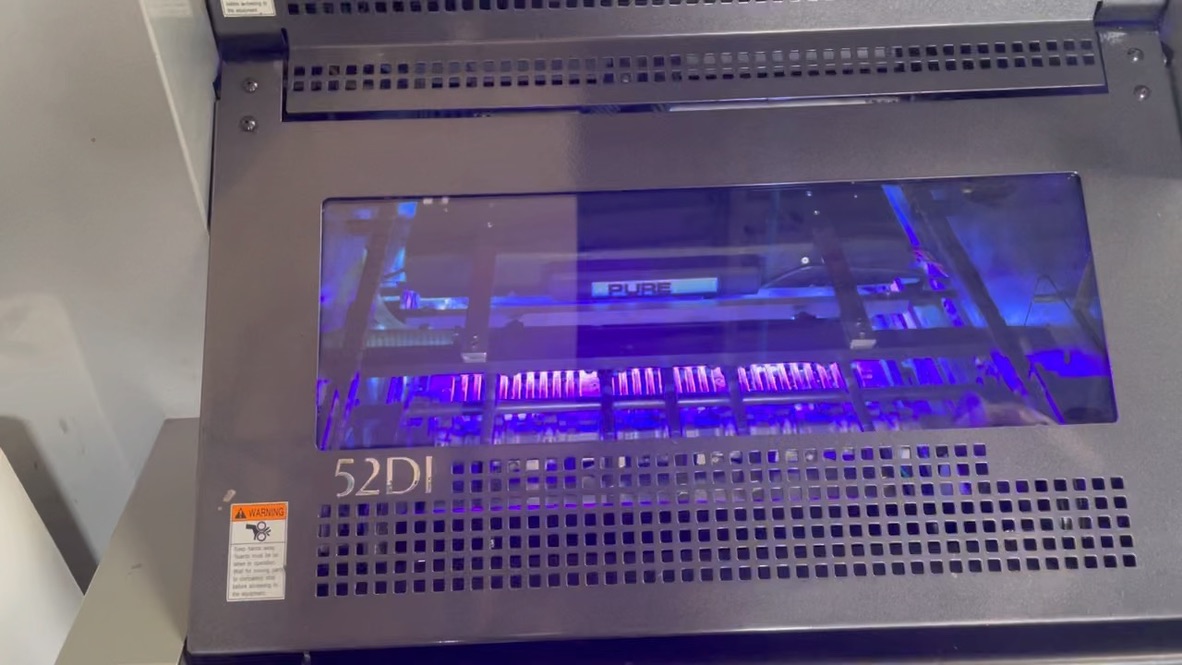
Any LED UV retrofit assessment should consider the press, materials, inks or coatings and required curing performance. It should also include installation requirements and the complete equipment configuration.
PureCure can discuss air-cooled LED UV curing and the factors affecting energy savings.
Send an enquiry with your press details and the issue you want to address, whether that is electricity use, heat, maintenance or downtime.
Based on the published PureCure article dated16October2026. Statements describe the reported visit or comparison, not a universal performance guarantee.